Introduction
Capital finance plays a vital role in the growth and stability of businesses, governments, and individuals around the world. It is the foundation of economic development because it helps organizations raise, manage, and invest money effectively. In today’s competitive market, understanding capital finance is more important than ever. Whether a company wants to expand operations, invest in technology, hire employees, or launch new products, financial capital is necessary for success.
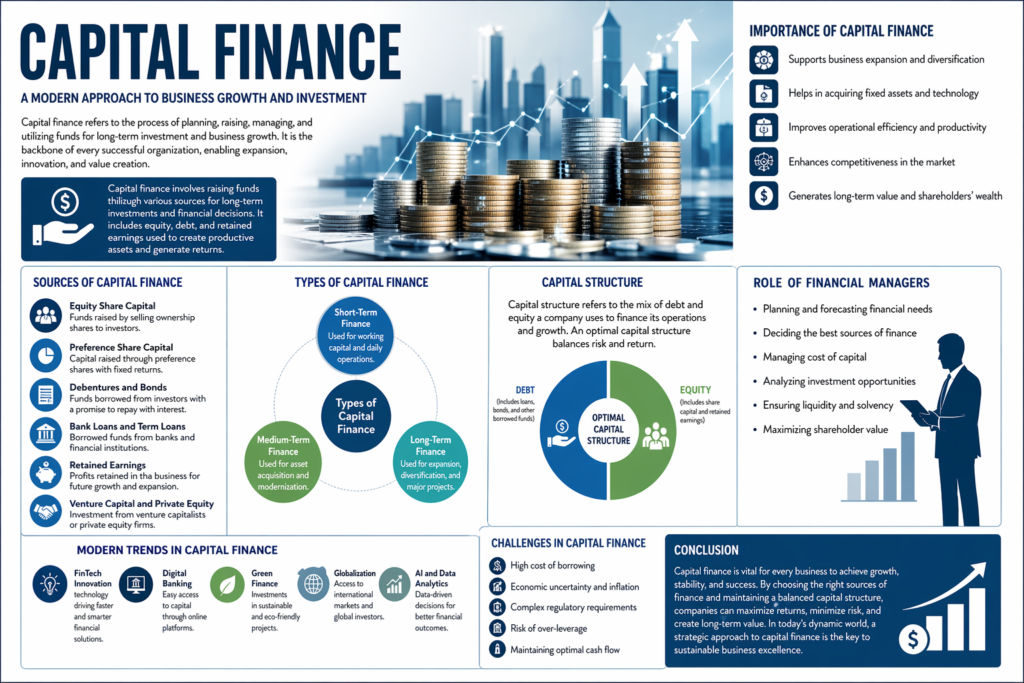
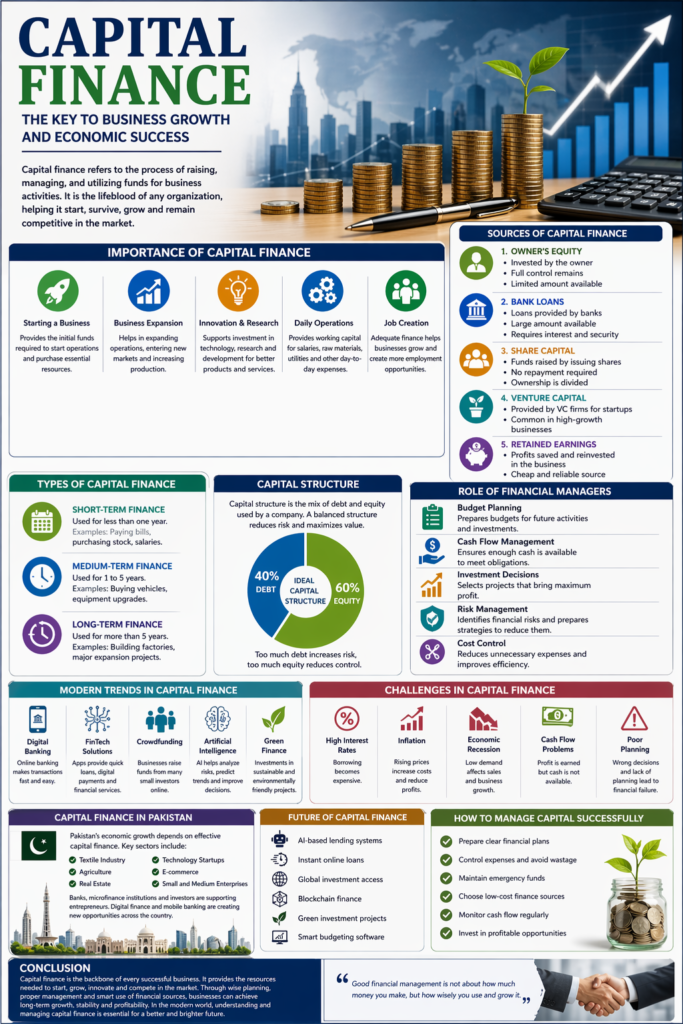
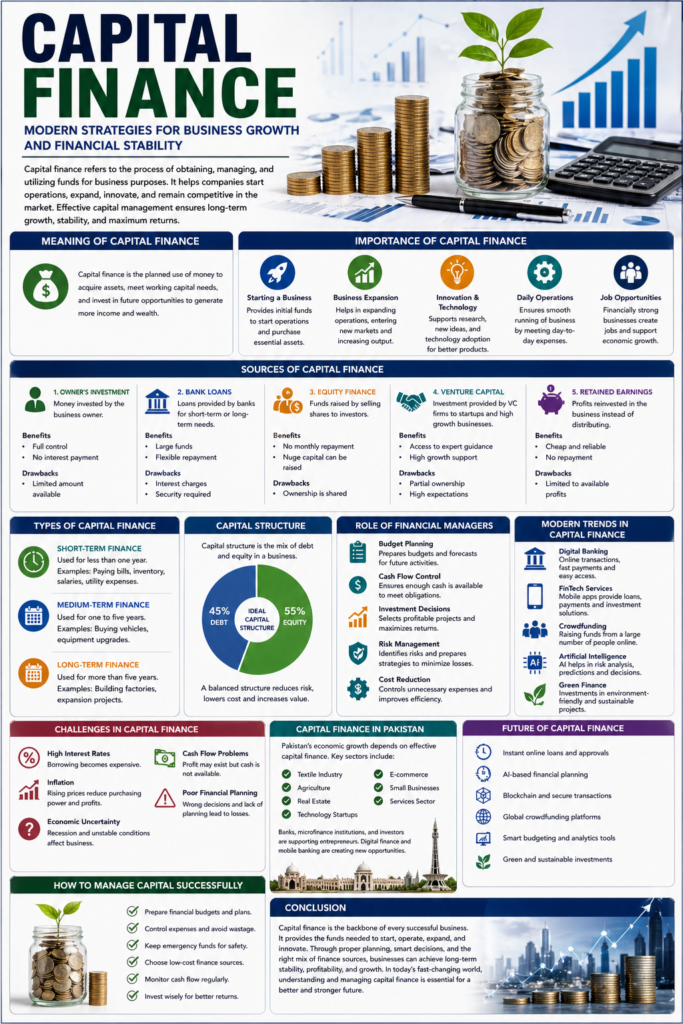
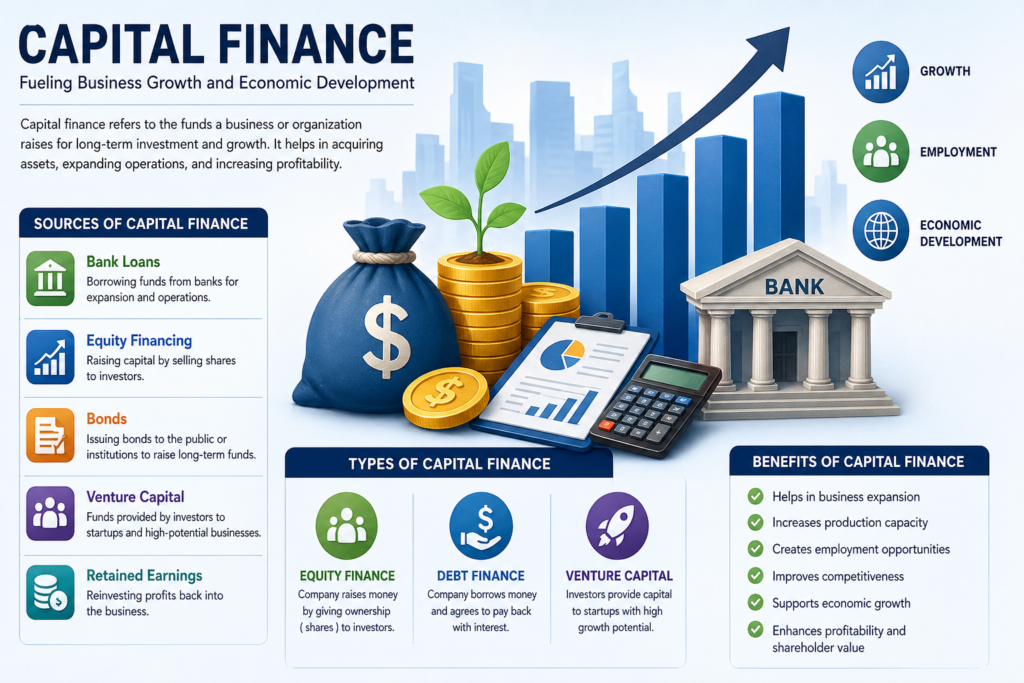
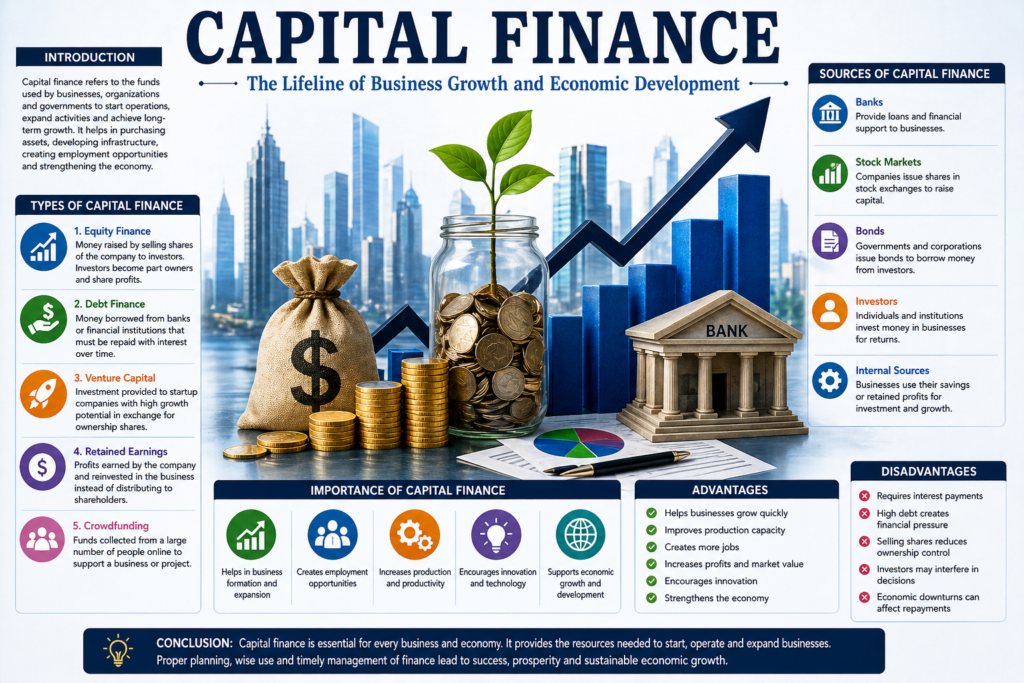
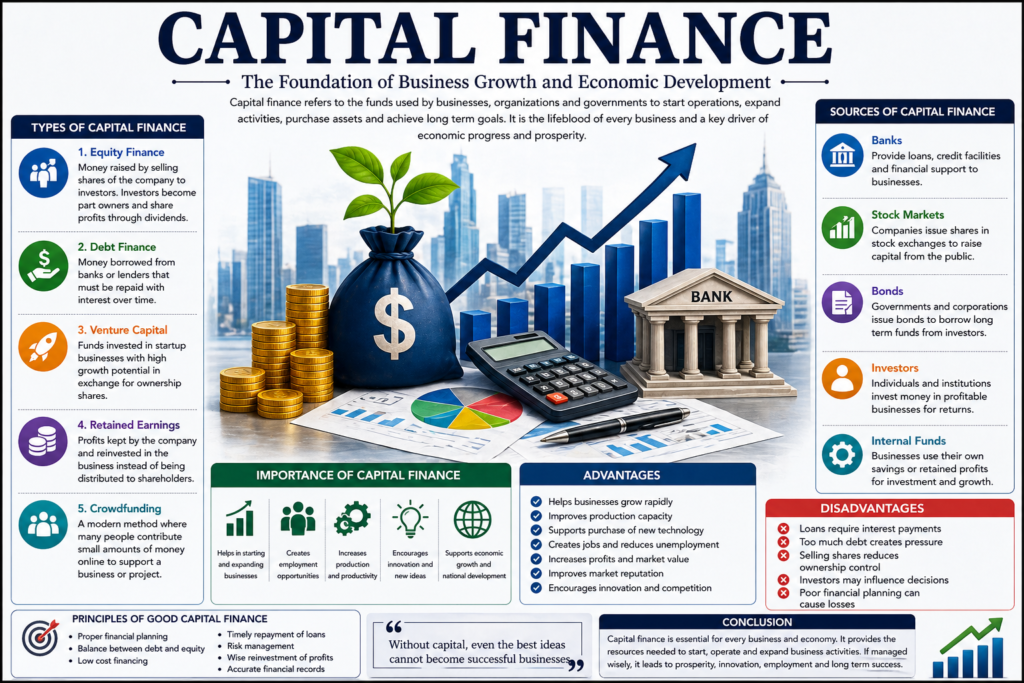
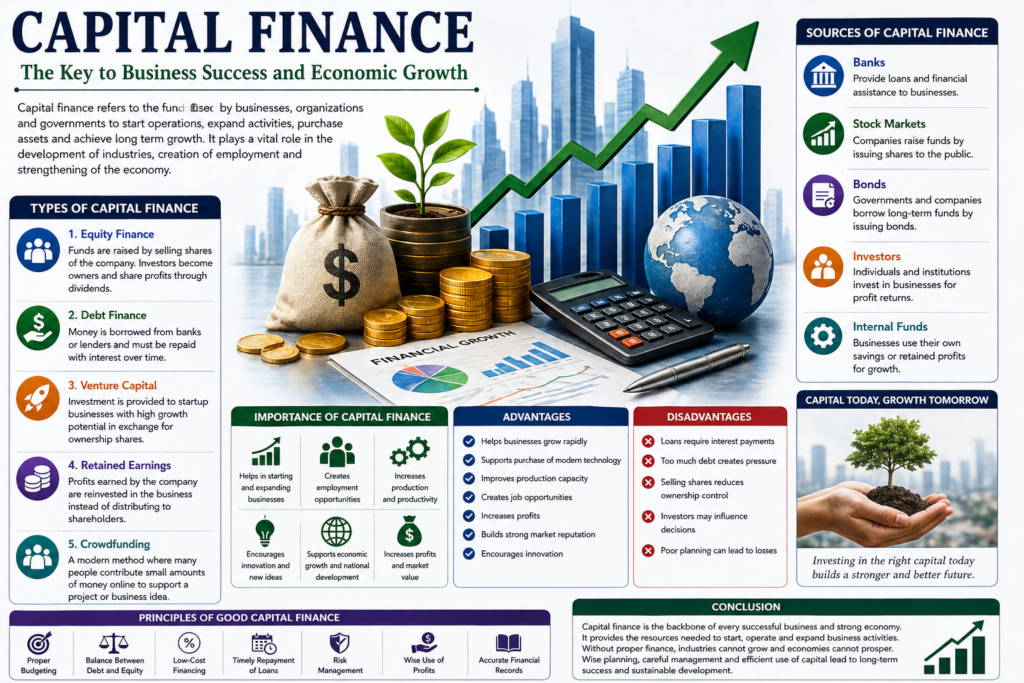
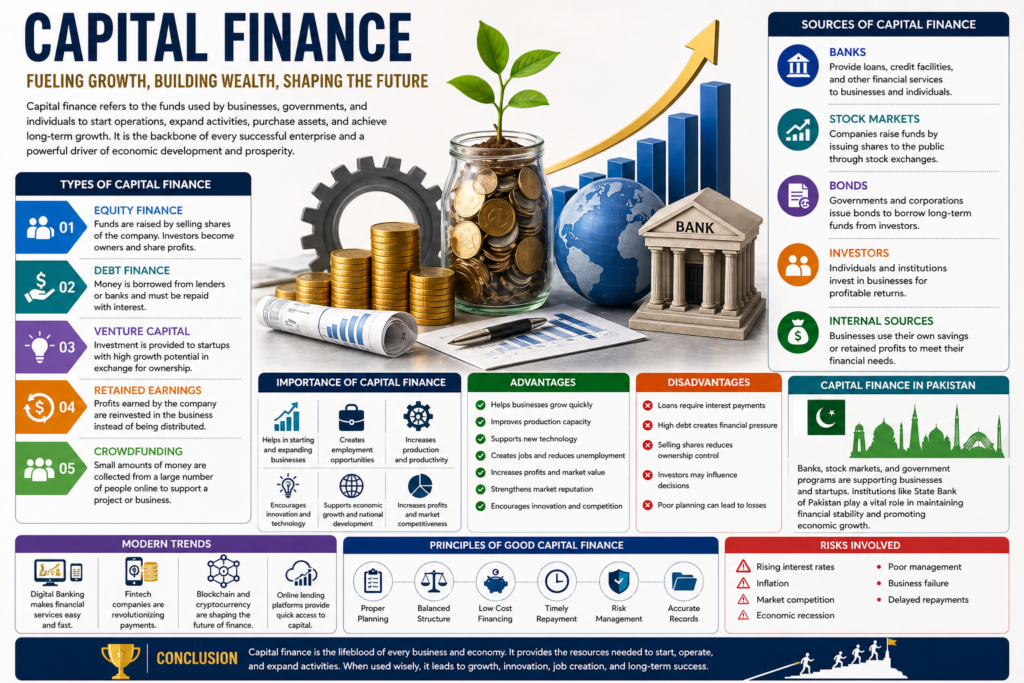
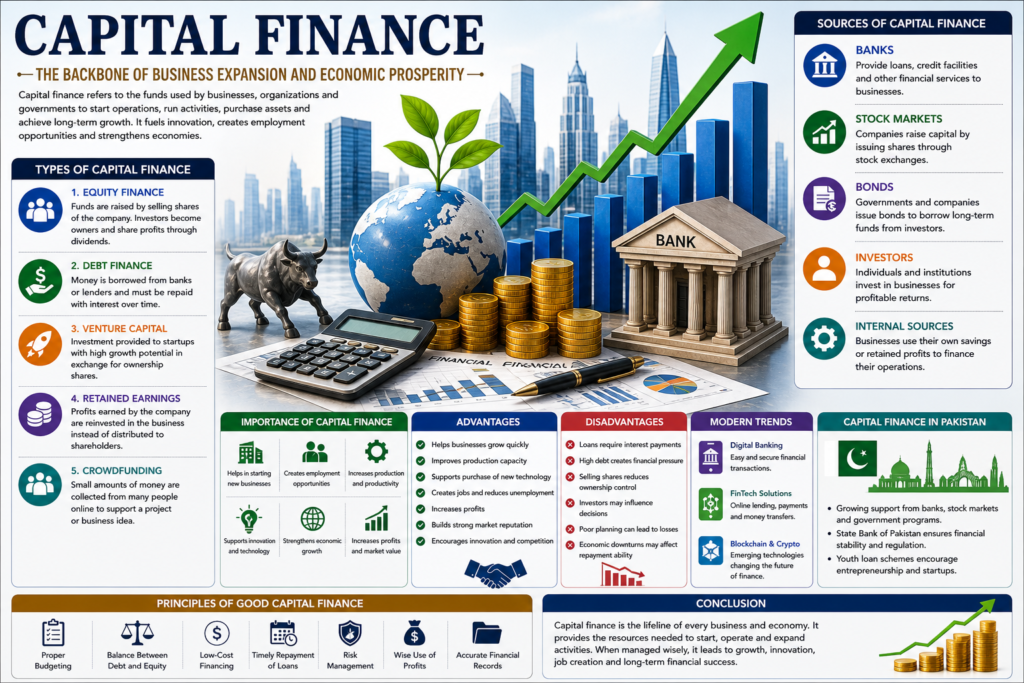
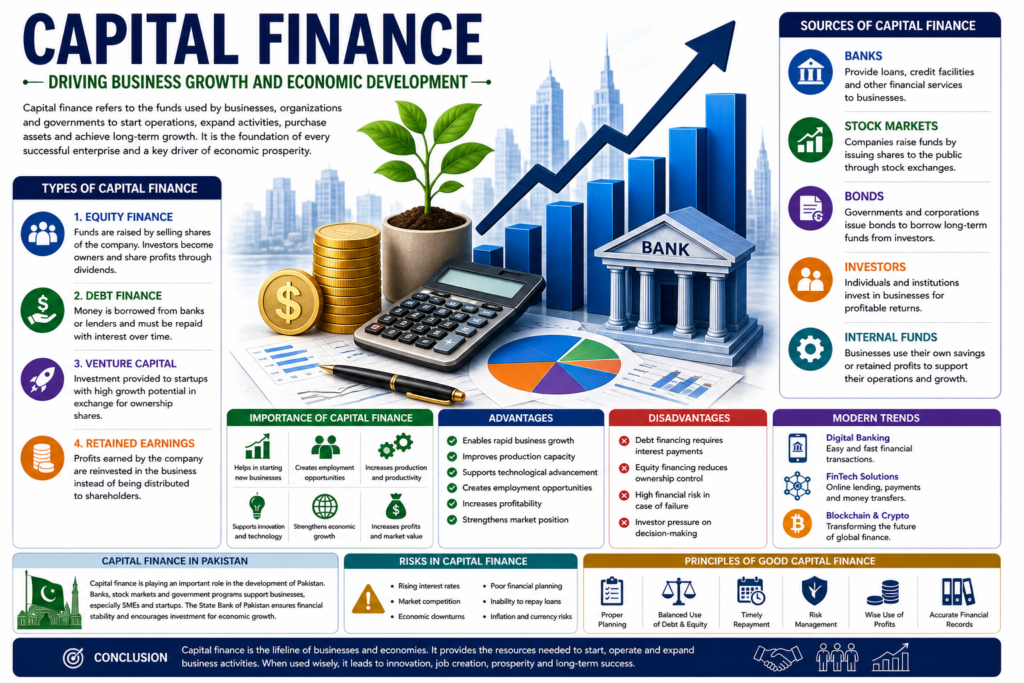
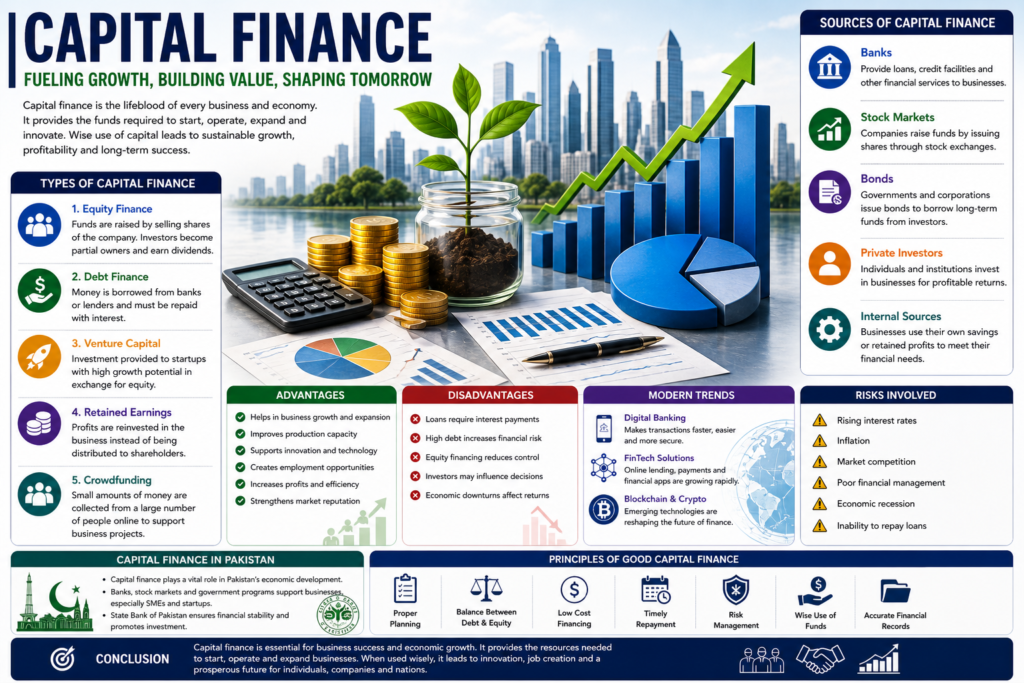
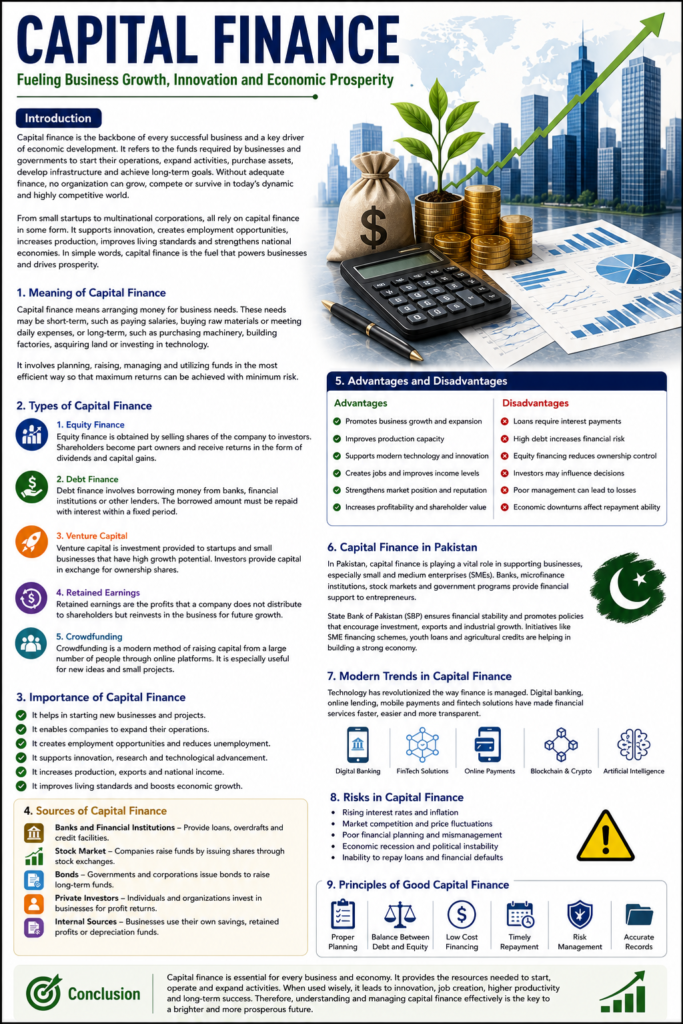
The term “capital finance” refers to the methods and systems used to acquire funds and manage investments. It includes equity financing, debt financing, venture capital, corporate investments, banking systems, and financial planning. Proper capital management ensures sustainable growth and reduces financial risks.
This article explores the meaning of capital finance, its importance, types, advantages, challenges, and strategies for effective financial management.
What Is Capital Finance?
Capital finance is the process of obtaining and managing funds for business operations, investments, or development projects. Companies require financial capital to maintain daily operations and achieve long-term goals. Without sufficient funding, businesses may struggle to survive in competitive markets.
Capital finance involves:
- Raising funds
- Managing investments
- Allocating resources
- Reducing financial risks
- Increasing profitability
Financial capital can come from various sources such as banks, investors, shareholders, government programs, or personal savings.
Importance of Capital Finance
Capital finance is essential because it supports economic growth and business expansion. Organizations use financial resources to improve productivity, innovate products, and increase market share.
1. Business Expansion
Companies need financial support to open new branches, enter international markets, or launch new services. Capital finance provides the resources needed for expansion.
2. Technology Investment
Modern businesses rely heavily on technology. Financial capital helps companies purchase advanced machinery, software, and digital systems.
3. Employment Opportunities
When businesses grow through proper financing, they create new job opportunities and contribute to economic development.
4. Risk Management
Financial planning allows organizations to prepare for emergencies and market uncertainties.
5. Increased Profitability
Efficient use of capital improves productivity and generates higher profits over time.
Types of Capital Finance
There are different forms of capital finance available for businesses and individuals. Each type has unique benefits and risks.
1. Equity Financing
Equity financing involves raising money by selling shares of a company to investors. Investors become partial owners and may receive dividends based on profits.
Advantages
- No repayment obligation
- Reduces financial pressure
- Investors may provide expertise
Disadvantages
- Ownership dilution
- Shared decision-making
- Profit sharing with shareholders
2. Debt Financing
Debt financing means borrowing money from banks or financial institutions. Businesses repay the loan with interest over time.
Advantages
- Ownership remains unchanged
- Interest payments may be tax-deductible
- Predictable repayment structure
Disadvantages
- Interest costs
- Risk of debt burden
- Strict repayment deadlines
3. Venture Capital
Venture capital is funding provided to startups and innovative businesses with high growth potential. Investors usually support technology and innovation-based companies.
Advantages
- Access to large investments
- Business mentorship
- Networking opportunities
Disadvantages
- High investor control
- Ownership dilution
- Pressure for rapid growth
4. Angel Investment
Angel investors are wealthy individuals who invest in startups in exchange for ownership equity.
Advantages
- Flexible funding
- Valuable industry knowledge
- Faster investment decisions
Disadvantages
- Limited funding size
- Shared ownership
- Potential conflicts
5. Public Financing
Governments sometimes provide grants, subsidies, or public funding programs to support businesses and economic development projects.
Advantages
- Lower financing costs
- Encourages innovation
- Supports economic growth
Disadvantages
- Strict eligibility rules
- Lengthy approval process
- Limited availability
Role of Capital Finance in Economic Growth
Capital finance is directly linked to national economic development. When businesses receive proper funding, they increase production, create jobs, and contribute to GDP growth.
Infrastructure Development
Governments use capital finance for roads, bridges, schools, and healthcare projects.
Innovation and Research
Financial investments encourage scientific research and technological innovation.
Entrepreneurship Support
Small businesses and startups rely on financing to transform ideas into successful enterprises.
International Trade
Capital finance supports exports, imports, and global business operations.
Financial Planning and Capital Management
Effective financial planning is critical for long-term success. Businesses must carefully manage resources to avoid losses and maximize returns.
Budgeting
Budgeting helps organizations monitor expenses and allocate resources efficiently.
Cash Flow Management
Cash flow management ensures businesses have enough liquidity for operations.
Investment Analysis
Companies evaluate investment opportunities to identify profitable projects.
Risk Assessment
Financial experts analyze market risks and develop strategies to minimize losses.
Challenges in Capital Finance
Despite its benefits, capital finance also presents several challenges.
1. Market Volatility
Economic fluctuations can affect investments and financial stability.
2. Rising Interest Rates
Higher interest rates increase borrowing costs for businesses.
3. Inflation
Inflation reduces purchasing power and increases operational expenses.
4. Financial Mismanagement
Poor financial planning may lead to bankruptcy or business failure.
5. Regulatory Compliance
Businesses must comply with government regulations and financial reporting standards.
Modern Trends in Capital Finance
The financial industry continues to evolve due to technological advancements and changing consumer behavior.
Digital Banking
Online banking and mobile payment systems have transformed financial transactions.
Cryptocurrency
Digital currencies like Bitcoin and Ethereum are becoming part of global finance discussions.
Artificial Intelligence
AI-powered financial tools improve investment analysis and fraud detection.
Sustainable Finance
Many investors now focus on environmentally and socially responsible investments.
FinTech Companies
Financial technology companies provide innovative solutions for payments, lending, and investment management.
Capital Finance for Small Businesses
Small businesses are the backbone of many economies. However, they often face financial challenges due to limited resources.
Common Funding Sources
- Bank loans
- Crowdfunding
- Angel investors
- Government grants
- Personal savings
Tips for Financial Success
Maintain Accurate Records
Keeping detailed financial records improves decision-making.
Build Strong Credit
Good credit scores increase financing opportunities.
Control Expenses
Reducing unnecessary costs improves profitability.
Diversify Revenue
Multiple income streams reduce financial risk.
Invest Wisely
Businesses should prioritize high-return investments.
Personal Capital Finance
Capital finance is not limited to businesses. Individuals also need financial planning for a secure future.
Saving and Budgeting
Creating a monthly budget helps individuals manage expenses effectively.
Investment Planning
Investing in stocks, bonds, or real estate can build long-term wealth.
Retirement Planning
Early retirement planning ensures financial security in later years.
Emergency Funds
Maintaining emergency savings helps handle unexpected situations.
The Future of Capital Finance
The future of capital finance is expected to become more digital, automated, and globally connected. Financial institutions are investing heavily in artificial intelligence, blockchain technology, and data analytics.
Experts predict that digital currencies, decentralized finance, and smart contracts will significantly influence future financial systems. Businesses that adapt to technological changes will gain competitive advantages.
Sustainable finance is also expected to grow rapidly as investors increasingly prioritize environmental and social responsibility.
Strategies for Effective Capital Finance
Organizations can improve financial performance through smart strategies.
1. Diversification
Investing in different sectors reduces overall financial risk.
2. Long-Term Planning
Businesses should focus on sustainable growth instead of short-term profits.
3. Financial Monitoring
Regular financial analysis helps identify weaknesses and opportunities.
4. Professional Advice
Financial advisors can provide valuable investment and risk management guidance.
5. Technology Integration
Using financial software improves efficiency and accuracy.
Conclusion
Capital finance is one of the most important elements of economic success and business growth. It enables organizations to invest, innovate, expand, and compete in modern markets. From startups to multinational corporations, every organization depends on financial capital for sustainability and profitability.
Understanding different types of financing, financial planning techniques, and investment strategies helps businesses and individuals make informed decisions. Although challenges such as market volatility and inflation exist, effective capital management can reduce risks and create long-term opportunities.
As technology continues to reshape the financial industry, capital finance will become even more dynamic and accessible. Businesses and individuals who embrace innovation, strategic planning, and responsible financial management will achieve greater success in the future.